
Barrier gate system Hall sensor:What is the role of a Hall sensor in a barrier gate system?
Q: What is the role of a Hall sensor in a barrier gate system?
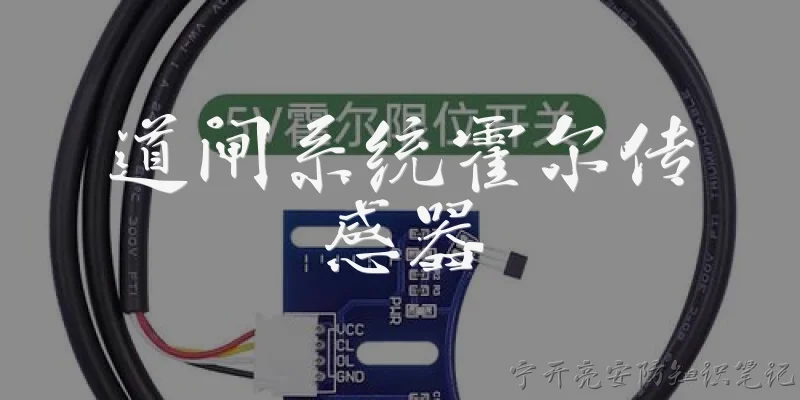
A: In a barrier gate system, a Hall sensor functions as a magnetic position and speed detector that helps the control unit understand exactly where the boom arm is at any moment. The sensor is typically mounted near the motor or the rotating shaft and detects the passage of small magnets attached to the drive mechanism. As the boom rotates, the magnets pass the Hall sensor and generate electrical pulses that correspond to specific angular positions. The controller uses this feedback to determine whether the arm is fully open, fully closed, or in transit. This information is essential for accurate stopping, smooth deceleration before reaching the limit, and preventing the boom from over-traveling and damaging the mechanism. Hall sensors also enable anti-crush protection, because if the boom meets an obstacle, the pulse pattern changes and the controller can reverse the motor immediately. Compared with mechanical limit switches, Hall sensors are contactless, wear-free, and highly reliable in outdoor environments. Their compact size and low cost make them a popular choice in modern barrier gate designs, especially where precise position feedback and long service life are required.
Q: How does a Hall sensor improve the reliability and safety of barrier gates?
A: A Hall sensor improves barrier gate reliability and safety by providing non-contact, real-time feedback on the boom's position and movement without any mechanical wear. Traditional limit switches use physical contacts that can corrode, stick, or break after repeated use, especially in outdoor conditions with dust and moisture. Hall sensors, by contrast, detect magnetic fields through a sealed housing, so they are immune to dirt, vibration, and contact wear, resulting in a much longer operational life. In terms of safety, the sensor's continuous pulse output allows the controller to monitor speed and detect abnormal conditions. If the boom slows unexpectedly or stops moving while the motor is still running, the system interprets this as an obstruction and triggers an immediate reverse or stop command, reducing the risk of injury or vehicle damage. This enables reliable anti-crush and anti-bump functions. Additionally, precise position feedback allows smooth acceleration and deceleration profiles, reducing mechanical stress on the gearbox and spring assembly. The result is fewer breakdowns, lower maintenance costs, and a barrier gate that responds consistently and safely in high-traffic parking and toll applications.
Q: What should be considered when selecting and installing a Hall sensor for a barrier gate system?
A: When selecting and installing a Hall sensor for a barrier gate system, several factors should be considered to ensure accurate and durable performance. First, choose a sensor with the right magnetic sensitivity and output type, such as digital or analog, to match the controller's input requirements. Unipolar or bipolar latching sensors are often used depending on whether position or rotation direction detection is needed. Second, consider the operating environment: select an industrial-grade Hall sensor rated for wide temperature ranges and protected against moisture, dust, and electromagnetic interference, since barrier gates are usually installed outdoors. Third, pay attention to the magnet arrangement. The distance between the magnet and the sensor should stay within the specified air gap, typically a few millimeters, and the magnets should be mounted securely on the rotating shaft or cam so that vibration does not alter the gap. Fourth, route signal cables away from high-current motor wires to avoid electrical noise that can cause false pulses. Finally, verify the installation by testing the full open and close cycle and confirming that the controller reads stable position signals at all points. Proper selection and careful installation ensure the Hall sensor delivers reliable, long-term feedback for the barrier gate.
Words of experience
Common scenarios of "Barrier gate system Hall sensor"
【Engineer】 Hi, I'm having trouble with the barrier gate system. The gate isn't detecting vehicles properly. Could you help me troubleshoot?
【Technician】 Sure, I can help. What symptoms are you seeing? Is the gate not opening at all, or is it failing to close?
【Engineer】 The gate opens when a vehicle approaches, but it doesn't close automatically after the vehicle passes. It stays open until manually closed.
【Technician】 That sounds like the hall sensor might not be detecting the vehicle leaving the loop. Have you checked the sensor wiring?
【Engineer】 I checked the wiring visually, and it seems fine. No loose connections. Could the sensor itself be faulty?
【Technician】 Possibly. Let's test the sensor output. Do you have a multimeter to measure the voltage from the hall sensor?
【Engineer】 Yes, I have one. What should I be looking for?
【Technician】 With no vehicle present, the sensor should output a high signal (around 5V). When a vehicle is over the loop, it should drop to near 0V. Check if that's happening.
【Engineer】 I measured it. With no vehicle, it's 5V. When I place a metal object over the loop, it stays at 5V. It doesn't change.
【Technician】 That indicates the sensor isn't detecting the change in inductance. Could be a faulty sensor or a problem with the loop itself. Have you checked the loop for damage?
【Engineer】 The loop is embedded in the ground, so it's hard to inspect. But I did notice some cracks in the pavement near the loop. Could that affect it?
【Technician】 Yes, cracks can cause the loop wire to break or short. That would explain why the sensor isn't detecting vehicles. You might need to replace the loop or repair the pavement.
【Engineer】 Replacing the loop sounds like a big job. Is there a way to test the loop without digging it up?
【Technician】 You can measure the inductance with an LCR meter. If it's out of spec, the loop is likely damaged. Do you have access to one?
【Engineer】 I think we have one in the workshop. What's the expected inductance range?
【Technician】 It depends on the loop size, but typically it's around 80-300 microhenries. Check the manual for your specific loop. If it's significantly off, the loop is bad.
【Engineer】 I'll measure it and get back to you. If the loop is bad, can we just replace the sensor instead?
【Technician】 No, if the loop is damaged, replacing the sensor won't help. The sensor relies on the loop's inductance change. You'll need to fix the loop first.
【Engineer】 Okay, I'll check the inductance and also inspect the loop area more closely. Thanks for the guidance.
【Technician】 You're welcome. Let me know what you find, and we can go from there. Good luck!