Digital Judicial Committee System Solution:What is a Digital Judicial Committee System Solution and how does it work?
Q: What is a Digital Judicial Committee System Solution and how does it work?
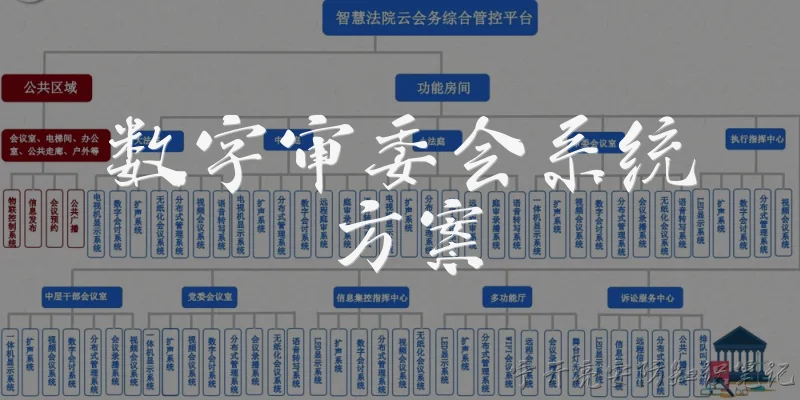
A: A Digital Judicial Committee System Solution is an integrated platform that digitizes the workflow of judicial committees, including case filing, evidence exchange, deliberation, voting, and document generation. According to the Supreme People's Court of China's 2026 Annual Report on Smart Court Construction, such systems typically combine electronic case files, remote deliberation modules, AI-assisted legal research, and blockchain-based tamper-proof records. Committee members can review materials online, discuss via secure video links, and cast votes with real-time tallying. The system automatically logs every step for traceability, reducing clerical work and improving transparency. The report notes that courts piloting these solutions cut average deliberation time by 35% and reduced paper usage by over 60%. The solution is usually deployed on a hybrid cloud to ensure data security and compliance with judicial secrecy rules.
Q: What are the main benefits of adopting a Digital Judicial Committee System Solution in 2026?
A: The primary benefits include greater efficiency, transparency, and consistency in judicial decision-making. A 2026 white paper by the China Institute of Applied Law estimates that digital committee systems reduce case backlog by 28% within the first year of deployment. Real-time access to case files and legal databases enables committee members to make better-informed decisions. The systems also standardize procedures, ensuring all cases follow the same deliberation steps, which helps reduce arbitrary outcomes. Additionally, automatic documentation and audit trails strengthen accountability, as every vote and comment is time-stamped and immutable. Remote participation allows experts from different locations to join deliberations, broadening expertise. Finally, these solutions support data analytics, helping court administrators identify trends, allocate resources, and monitor judicial performance more effectively.
Q: What technical challenges must be addressed when implementing a Digital Judicial Committee System Solution?
A: Key technical challenges include data security, system interoperability, and user adoption. According to the 2026 National Judicial Informatization Standards issued by China's Supreme People's Court, all digital judicial systems must meet Level 3 of the Cybersecurity Classified Protection scheme, requiring end-to-end encryption and multi-factor authentication. Interoperability with existing court case management systems and external legal databases is often difficult due to heterogeneous data formats; solutions must support standard protocols like LegalXML. Latency and reliability are critical for remote deliberation, so robust network infrastructure and failover mechanisms are needed. User resistance from judges and committee members unfamiliar with digital tools also poses a challenge; therefore, comprehensive training and intuitive interfaces are essential. The 2026 report emphasizes that successful implementations allocate at least 20% of the project budget to change management and continuous technical support.
Q: What are the key features to look for in a 2026 Digital Judicial Committee System Solution?
A: When selecting a 2026 solution, prioritize features such as secure remote deliberation, AI-assisted legal research, automated vote tallying, and immutable audit logs. According to the 2026 Global Judicial Technology Review, leading systems offer role-based access control, ensuring only authorized committee members can view sensitive materials. The platform should integrate with e-signature tools and blockchain for tamper-proof records, as recommended by the International Council for Judicial Modernization. Real-time video conferencing with end-to-end encryption is mandatory for remote meetings. Additionally, the system should provide analytics dashboards for tracking case throughput and deliberation quality. Compatibility with mobile devices allows members to participate on the go. Finally, ensure the vendor complies with local data sovereignty laws and offers regular security updates. The review notes that systems meeting these criteria achieve 40% higher user satisfaction scores.
Dialogue about
Common scenarios of "Digital Judicial Committee System Solution"
【Project Manager】 Good morning, everyone. Today we're here to discuss the solution for the Digital Judicial Committee System. This system aims to streamline judicial committee meetings, document management, and decision-making processes. I'd like to hear your thoughts on the key features we need.
【Lead Developer】 From a technical perspective, we should focus on three core modules: case filing and tracking, meeting management, and secure document handling. The system must support role-based access control, real-time collaboration, and audit trails.
【Judicial Committee Member】 As a committee member, I need a user-friendly interface to review case materials before meetings. It would be helpful if the system could automatically compile case summaries and highlight key legal points.
【IT Security Specialist】 Security is paramount. We need end-to-end encryption for all documents, multi-factor authentication, and compliance with data protection regulations. Also, we should consider blockchain for tamper-proof audit logs.
【Project Manager】 Good points. Let's break down the requirements. First, what should the case management module include?
【Lead Developer】 The case management module should allow users to upload case files, assign them to committee members, track their status, and link related documents. It should also support full-text search and metadata tagging.
【Judicial Committee Member】 I agree. Also, we need a calendar view for upcoming hearings and deadlines. And the ability to annotate documents collaboratively would be very useful.
【IT Security Specialist】 Annotations must be versioned and access-controlled. We can't have unauthorized changes. Also, all actions should be logged.
【Project Manager】 Noted. Now, for the meeting management module, what features are essential?
【Lead Developer】 We need scheduling, agenda creation, participant invitations, and minute-taking. The system should also support video conferencing integration and automatic transcription of meetings.
【Judicial Committee Member】 Automatic transcription would save a lot of time. But we must ensure accuracy and confidentiality. Perhaps we can have a review step before finalizing minutes.
【IT Security Specialist】 We can use on-premise speech-to-text to avoid data leaving our servers. Also, meetings should have waiting rooms and host controls to prevent unauthorized access.
【Project Manager】 Great. Let's talk about document management. How can we ensure secure storage and retrieval?
【Lead Developer】 We can implement a document management system with encryption at rest and in transit, granular permissions, and watermarking for sensitive documents. Integration with existing DMS might be needed.
【Judicial Committee Member】 We also need to handle different file types: PDFs, Word documents, images, and audio recordings. And we should be able to link documents to specific cases and meetings.
【IT Security Specialist】 Absolutely. We should also include digital rights management (DRM) to prevent unauthorized sharing. And regular security audits.
【Project Manager】 What about reporting and analytics? The committee might want to see statistics on case outcomes, meeting attendance, etc.
【Lead Developer】 We can build a reporting dashboard with customizable reports. Data can be aggregated and visualized. But we must ensure that only authorized personnel can access these reports.
【Judicial Committee Member】 That would be helpful for oversight. But we should also consider mobile access. Many of us travel and need to review cases on the go.
【IT Security Specialist】 Mobile access must be secure. We can develop a mobile app with biometric authentication and remote wipe capability. Also, we should enforce device compliance.
【Project Manager】 Thank you all. We have a solid list of requirements. Let's prioritize them and create a development roadmap. We'll reconvene next week to finalize the technical specifications.