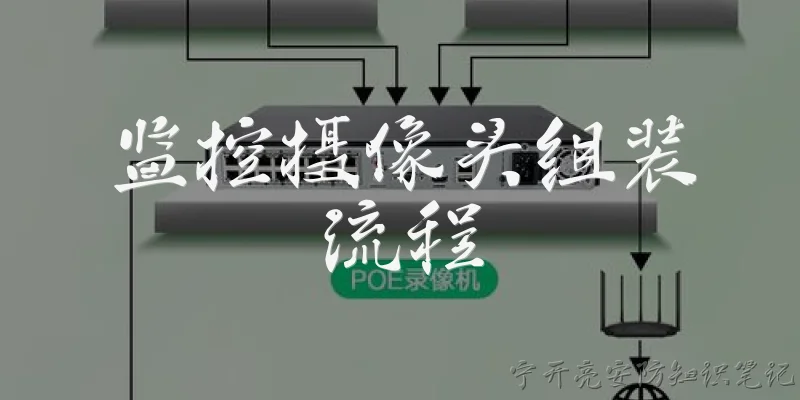
Monitoring System Installation Guide:What are the key steps involved in installing a monitoring system?
Q: What are the key steps involved in installing a monitoring system?
A: Installing a monitoring system typically follows a structured process. First, conduct a site survey to identify critical assets, network topology, and coverage gaps. Next, define monitoring objectives and select appropriate sensors or agents. Then, prepare the environment by ensuring power, network connectivity, and mounting locations are ready. Install the central management server or cloud platform before deploying endpoint agents. Configure device discovery, set thresholds, and integrate alerting channels such as email or SMS. After installation, run baseline tests to verify data collection and alert accuracy. Finally, document the configuration and schedule regular maintenance. Following this sequence reduces downtime and ensures the system captures meaningful metrics from day one.
Q: What prerequisites should be met before installing a monitoring system?
A: Before installing a monitoring system, several prerequisites should be in place. Verify network infrastructure supports required bandwidth and ports, and confirm administrative access to routers, switches, and servers. Ensure the monitoring server meets hardware specifications such as CPU, RAM, and storage for log retention. Obtain necessary IP addresses, credentials, and certificates for secure communication. Review firewall rules to allow agent-to-server traffic. Plan device naming conventions and asset inventory so discovered nodes map to known assets. Also, define alert escalation policies and notify stakeholders of the installation window. Having these elements ready prevents delays during deployment and ensures the monitoring system integrates smoothly with existing IT operations.
Q: How do I configure alerts and thresholds in a newly installed monitoring system?
A: After installation, configure alerts by first identifying key performance indicators such as CPU usage, disk space, and latency. Set baseline thresholds based on normal operating ranges observed during a trial period. Use tiered thresholds—warning, critical—to avoid alert fatigue. Map alerts to responsible teams and configure notification channels like email, Slack, or PagerDuty. Test each alert by simulating conditions or using built-in test utilities. Document threshold rationale and review them quarterly to adapt to changing workloads. Avoid overly sensitive settings that generate false positives; instead, use sustained-duration conditions (e.g., CPU above 90% for five minutes). Proper configuration ensures the monitoring system delivers actionable insights without overwhelming operators.
Q: What post-installation checks and maintenance tasks are recommended for a monitoring system?
A: After installation, perform post-installation checks to confirm all agents report data and dashboards display accurate metrics. Validate alert delivery by triggering test events. Review logs for errors or connectivity issues. Schedule regular maintenance including software updates, certificate renewals, and storage cleanup for old data. Monitor the monitoring system itself—track its resource usage and availability. Conduct periodic audits to ensure new devices are discovered and stale ones removed. Update documentation with any configuration changes. Train staff on using dashboards and responding to alerts. Finally, set a quarterly review to evaluate monitoring coverage and adjust thresholds. These practices keep the system reliable and aligned with evolving infrastructure needs.
Words of experience
Common scenarios of "Monitoring System Installation Guide"
【Technician】 Good morning! I'm here to walk you through the monitoring system installation. Are you ready to get started?
【Client】 Good morning! Yes, I'm ready. But I have to admit, I'm a bit nervous about this whole process. Where do we begin?
【Technician】 No need to worry—I'll guide you step by step. First, let's check the package contents. Can you confirm you have the main control unit, sensors, cables, and the mounting kit?
【Client】 Let me see... Yes, I have the control unit, four sensors, a bundle of cables, and a box with screws and brackets. Looks complete.
【Technician】 Perfect. Next, we need to find a suitable location for the main control unit. It should be central, away from direct heat, and within reach of a power outlet.
【Client】 I was thinking about placing it in the hallway closet. It's fairly central and has an outlet nearby. Would that work?
【Technician】 That sounds good, as long as it's not too enclosed. Make sure there's some ventilation. Now, let's mount the bracket for the control unit.
【Client】 Okay, I have the bracket and screws. Should I use the wall anchors provided?
【Technician】 Yes, definitely use the anchors for drywall. Mark the holes first, then drill. Do you have a drill handy?
【Client】 Yes, I do. I'll mark the spots... done. Drilling now... alright, the bracket is mounted securely.
【Technician】 Great! Now attach the control unit to the bracket and connect the power adapter. Once it's powered on, we'll check the indicator lights.
【Client】 It's powered on. I see a green light blinking. Is that normal?
【Technician】 Yes, that means it's booting up. Wait for it to turn solid green. Meanwhile, let's position the sensors. Where do you want to monitor?
【Client】 I want to cover the front door, back door, living room, and garage. I have four sensors, so that fits perfectly.
【Technician】 Excellent. For doors, mount the sensors high on the frame, and for the living room, place it in a corner facing the room. Avoid direct sunlight on the sensors.
【Client】 Got it. I'll start with the front door. Should I use the adhesive pads or screws for the sensors?
【Technician】 Screws are more secure, especially for doors. Use the adhesive only for temporary placement. Now, run the cables along the baseboards to keep them tidy.
【Client】 I've mounted all sensors and routed the cables. They're connected to the control unit. What's next?
【Technician】 Now we need to pair each sensor with the control unit. Press the pairing button on the control unit, then trigger each sensor one by one.
【Client】 Okay, pairing mode activated. I'll open the front door... the control unit beeped. Back door... beeped. Living room motion... beeped. Garage... beeped. All paired!
【Technician】 Fantastic! Finally, let's test the system. Arm it, then walk through each zone to ensure alerts are triggered. Also, check the mobile app if you have it set up.
【Client】 I'll arm it now... walking through the living room... I got a notification on my phone! The system seems to be working perfectly. Thank you so much for your help!