
What does facial recognition surveillance mean?:What is facial recognition surveillance and how does it work?
Q: What is facial recognition surveillance and how does it work?
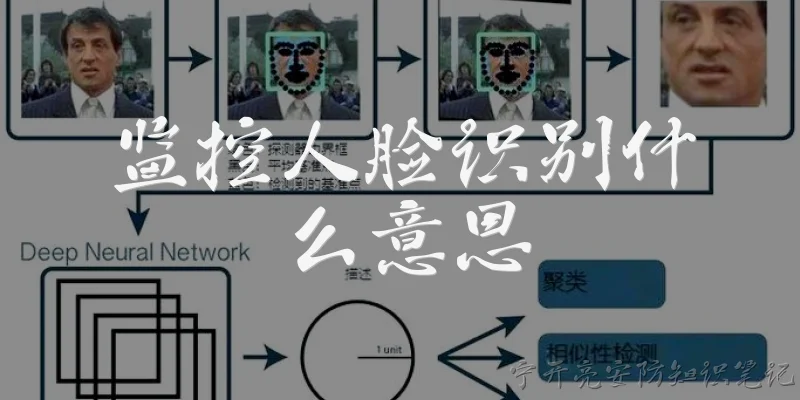
A: Facial recognition surveillance refers to the use of automated systems to identify or verify individuals by analyzing their facial features, typically from video feeds or images. The process involves capturing a face, mapping key landmarks, converting them into a mathematical template, and comparing that template against a database. According to the 2026 report from the European Union Agency for Fundamental Rights, such systems are increasingly deployed in public spaces, airports, and retail environments. The report notes that while the technology can enhance security and efficiency, it also raises significant privacy concerns because it enables continuous, indiscriminate monitoring. Unlike fingerprinting, facial recognition works at a distance without consent, making it a powerful but controversial tool for mass surveillance.
Q: Why is facial recognition surveillance considered a privacy threat?
A: Facial recognition surveillance is considered a privacy threat because it allows authorities or private companies to track individuals' movements and identities in real time without their knowledge or consent. The 2026 annual report by the UK's Information Commissioner's Office warns that widespread deployment can create a 'chilling effect' on free expression and assembly, as people may avoid public spaces if they feel constantly watched. The report also highlights risks of function creep, where systems initially justified for security are later used for commercial or immigration enforcement. Moreover, inaccurate matches can lead to wrongful stops or arrests, disproportionately affecting marginalized groups. These factors make facial recognition surveillance a focal point in debates over balancing public safety with civil liberties.
Q: What are the main legal regulations for facial recognition surveillance in 2026?
A: By 2026, legal regulations for facial recognition surveillance vary globally but have tightened in several regions. The EU's Artificial Intelligence Act, fully applicable since August 2026, classifies real-time remote biometric identification in publicly accessible spaces as high-risk, banning it for law enforcement except in narrowly defined cases like terrorism or child abduction. In the United States, the 2026 National Biometric Privacy Act (proposed) would require explicit consent for commercial use and mandate audits for accuracy and bias. China's 2026 Personal Information Protection Law amendments strengthen opt-in requirements for facial data processing. According to the 2026联合国人权事务高级专员办事处 report, at least 40 countries now have some form of restriction, though enforcement remains uneven. These laws aim to curb abuse while allowing beneficial applications.
Q: How accurate is facial recognition surveillance and what are its error rates?
A: The accuracy of facial recognition surveillance has improved but remains imperfect. A 2026 study by the U.S. National Institute of Standards and Technology (NIST) found that top-tier algorithms achieve false non-match rates below 0.1% for high-quality frontal images, but error rates rise sharply for low-resolution, angled, or masked faces. The same study revealed demographic disparities: false positive rates for Black and Asian faces can be 10 to 100 times higher than for white faces in some systems. The 2026 report from the UN Human Rights Office notes that these errors can lead to wrongful identifications in surveillance dragnets. Consequently, many experts call for human review before any law enforcement action, and some cities have banned real-time use due to reliability concerns.
Dialogue about
Common scenarios of "What does facial recognition surveillance mean?"
【Alex】 Hey Jamie, I keep hearing about facial recognition surveillance. What exactly does that mean?
【Jamie】 It's a technology that uses cameras and AI to identify people by analyzing their facial features. Basically, it can match a face to a database of known individuals.
【Alex】 So it's like something out of a sci-fi movie? Where does it actually get used?
【Jamie】 It's already used in many places: airports for security checks, smartphones for unlocking, some stores for tracking customers, and even by police to identify suspects.
【Alex】 That sounds convenient, but also a bit creepy. Is it always accurate?
【Jamie】 Not always. It can have errors, especially with people of color, women, and older adults. False matches have led to wrongful arrests.
【Alex】 That's concerning. What about privacy? Do people know when they're being scanned?
【Jamie】 Often they don't. Cameras can be hidden or in public spaces, and many people aren't aware that their faces are being analyzed in real time.
【Alex】 So it's like constant surveillance without consent. What are the benefits then?
【Jamie】 Benefits include finding missing persons, catching criminals, and enhancing security at events. It can also speed up processes like boarding a flight.
【Alex】 But couldn't it be misused by governments or corporations?
【Jamie】 Absolutely. There's potential for mass surveillance, tracking protests, or targeting individuals based on political views. Some countries already use it that way.
【Alex】 Are there any laws regulating it?
【Jamie】 It varies. Some cities have banned it, like San Francisco. The EU has strict rules under GDPR. But in many places, it's largely unregulated.
【Alex】 What can we do to protect ourselves?
【Jamie】 Not much in public spaces, but you can support privacy advocacy groups, demand transparency from companies, and be aware of where cameras are.
【Alex】 Do you think it's worth the trade-off between security and privacy?
【Jamie】 That's the big debate. Some say security is paramount, others argue privacy is a fundamental right. It really depends on how it's implemented and controlled.
【Alex】 I guess it's a double-edged sword. Thanks for explaining, Jamie.
【Jamie】 No problem, Alex. It's important to stay informed and question how these technologies are used.