How to connect a camera to a video recorder:How do I connect a modern IP camera to a video recorder in 2026?
Q: How do I connect a modern IP camera to a video recorder in 2026?
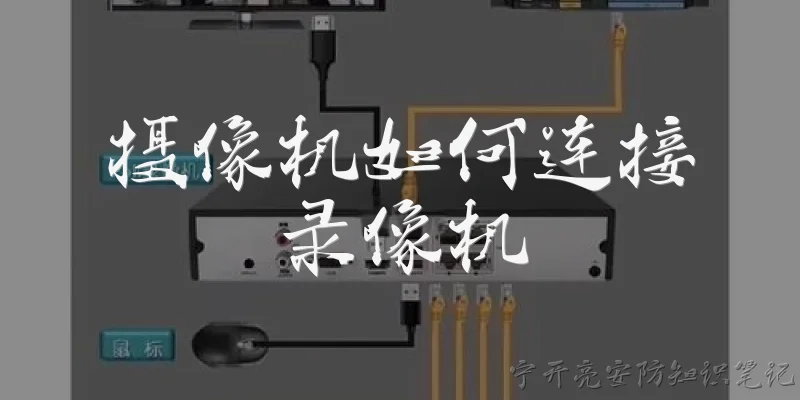
A: In 2026, connecting an IP camera to a video recorder (NVR) is largely plug-and-play thanks to ONVIF 2.5+ and newer standards. First, physically connect the camera to your network switch or directly to a PoE port on the NVR. Power on the NVR and access its interface either locally via HDMI or through the manufacturer's cloud app. Navigate to the 'Camera Management' or 'Device Search' section. The NVR should auto-discover the camera within 30 seconds. Select it and enter the camera's credentials (often admin and a unique password set during manufacturing). If auto-discovery fails, manually add the camera by entering its IP address, RTSP URL (typically rtsp://username:password@camera-ip:554/stream1), and port 554. For added security, many 2026 cameras support TLS 1.3 encryption, so enable HTTPS and SRTP in the NVR settings. Finally, assign a recording schedule and verify live view. Some AI-powered NVRs also require you to enable 'smart codec' compatibility, so check for firmware updates on both devices before troubleshooting.
Q: What is the correct way to connect an analog CCTV camera to a DVR in 2026?
A: Although analog cameras are less common in 2026, many legacy systems still use them. Start by connecting the camera's BNC video output to the DVR's BNC input using a coaxial cable (RG59 or RG6). If the camera requires separate power (non-PoE), use a 12V DC power adapter; for PoE analog cameras, connect via an Ethernet cable to a PoE injector or switch. Next, connect the DVR to a monitor via HDMI or VGA and power it on. The DVR should auto-detect analog signals, but you may need to manually set the video standard (NTSC or PAL) in the menu. For cameras with PTZ control, connect the RS-485 wires (usually two wires) to the DVR's RS-485 port, matching polarity. Modern hybrid DVRs (2026 models) support both analog and IP cameras, so you can mix and match—just ensure the DVR's firmware is updated to avoid compatibility issues with newer H.265+ analog cameras. Test each channel by viewing live feed and adjusting termination if the signal is weak.
Q: How can I connect a camera to a video recorder over Wi-Fi in 2026?
A: Wireless camera-to-recorder connections in 2026 are more reliable thanks to Wi-Fi 6E and WPA3. First, ensure your video recorder (NVR or DVR) supports Wi-Fi either built-in or via a USB dongle. Power on the camera and put it into pairing mode (usually by pressing a reset or WPS button). On the recorder, go to 'Network Settings' and select 'Wireless Camera Pairing.' The recorder will scan for available cameras; choose yours and enter the Wi-Fi password. For cameras that don't support WPS, manually enter the camera's SSID and password in the recorder's interface. Some 2026 systems use Bluetooth for initial handshake, so enable Bluetooth on your phone if using a mobile app for setup. Once connected, assign a static IP to the camera to avoid dropouts. Keep in mind that wireless connections can suffer from interference, so place the recorder and camera within 30 feet and avoid thick walls. For 4K streams, use a dedicated 5GHz or 6GHz band. Finally, test recording and motion alerts to confirm stability.
Dialogue about
Common scenarios of "How to connect a camera to a video recorder"
【User】 Hi, I just bought a new camera and I want to connect it to my video recorder. Can you help me with that?
【TechSupport】 Of course! I'd be happy to help. First, can you tell me what kind of camera you have and what model your video recorder is?
【User】 I have a Canon EOS R5 camera and a Panasonic DMR-BWT720 video recorder.
【TechSupport】 Great. The Canon EOS R5 has HDMI output, and the Panasonic DMR-BWT720 has HDMI input. So you can connect them using an HDMI cable. Do you have an HDMI cable available?
【User】 Yes, I have an HDMI cable. But I'm not sure which ports to use.
【TechSupport】 On the camera, look for a port labeled 'HDMI' or 'Micro HDMI'. The EOS R5 uses a Micro HDMI port. On the video recorder, find the 'HDMI IN' port. Connect one end of the cable to the camera's Micro HDMI port and the other end to the recorder's HDMI IN.
【User】 Okay, I see the Micro HDMI port on the camera and an HDMI IN on the recorder. I've connected them. What next?
【TechSupport】 Now turn on both devices. On the video recorder, press the 'Input Select' or 'Source' button on the remote to choose the HDMI input you used. You should see the camera's live view on your TV if the recorder is connected to a TV.
【User】 I turned them on and selected HDMI, but I don't see anything on the TV. The TV is connected to the recorder via HDMI OUT.
【TechSupport】 Make sure the camera is turned on and not in sleep mode. Also, check that the HDMI cable is firmly plugged in at both ends. Sometimes the Micro HDMI port can be loose.
【User】 I checked the connections, they seem fine. The camera is on. Still no signal.
【TechSupport】 Let's try a different HDMI cable. Sometimes cables can be faulty. Also, ensure the camera's HDMI output resolution is set to a compatible mode, like 1080p, not 4K, if the recorder doesn't support 4K input.
【User】 I don't have another cable right now. How do I change the camera's HDMI resolution?
【TechSupport】 On the Canon EOS R5, go to Menu > Shooting Settings > HDMI display > Resolution. Set it to 1080p or Auto. Then try again.
【User】 I changed it to 1080p. Still nothing. Could it be the recorder's settings?
【TechSupport】 Possibly. On the Panasonic DMR-BWT720, go to Menu > Setup > HDMI Settings > HDMI Input. Make sure it's enabled. Also, try a different HDMI IN port if available.
【User】 I only have one HDMI IN. I enabled it in settings, but still no picture.
【TechSupport】 Let's check if the camera outputs a signal at all. Connect the camera directly to the TV via HDMI. If you see the camera's output, then the issue is with the recorder or the cable.
【User】 I connected the camera directly to the TV and I can see the live view. So the camera and cable are fine.
【TechSupport】 Great, that narrows it down. The issue might be with the recorder's HDMI input. Try resetting the recorder to factory defaults or updating its firmware. Also, ensure the recorder is set to the correct input source.
【User】 I'll try updating the firmware. Thanks for your help!
【TechSupport】 You're welcome! If you need further assistance, feel free to ask. Good luck!