Low-light interference on camera:How does low-light interference affect camera performance in 2026, and what new sensor technologies are reducing it?
Q: How does low-light interference affect camera performance in 2026, and what new sensor technologies are reducing it?
A: In 2026, low-light interference remains one of the biggest challenges in photography and videography, but the landscape has shifted dramatically thanks to next-generation sensors. Traditional interference appears as color noise, chroma blotches, and reduced dynamic range when ISO climbs. The newest stacked back-illuminated CMOS sensors, combined with quantum-dot color filters, capture significantly more photons per pixel, which lowers the signal-to-noise ratio even at ISO 12800 and beyond. Sony's 2026 lineup and Samsung's ISOCELL GN6 use dual conversion gain and deep trench isolation to suppress cross-talk, a major source of low-light interference. Additionally, AI-driven denoising pipelines built directly into image signal processors now distinguish between actual detail and noise, preserving texture while removing interference. Computational photography also plays a role: multi-frame stacking, now standard in flagship phones and many mirrorless cameras, merges several exposures to cancel random noise. The practical result is that modern cameras can shoot handheld at night with far less interference than models from even three years ago, though physics still limits performance in extreme darkness. Understanding these technologies helps photographers choose gear and settings that minimize interference.
Q: What are the most effective camera settings to reduce low-light interference in 2026?
A: Reducing low-light interference in 2026 starts with mastering a few key settings. First, keep ISO as low as possible while maintaining a shutter speed fast enough to avoid motion blur; with today's dual-gain sensors, the second gain stage often kicks in around ISO 800 or 1600, so choosing that native value can actually produce less noise than an intermediate ISO. Second, shoot in RAW or a high-bit-depth HEIF format, because these retain more data for noise reduction in post-processing without destroying detail. Third, use a wider aperture if your lens allows it, but be aware that extremely fast lenses can introduce their own aberrations in low light. Fourth, enable in-camera multi-frame noise reduction or handheld high-resolution modes, which align and merge multiple frames to cancel random interference. Fifth, turn on any AI denoise feature but keep it at a moderate level to avoid plastic-looking textures. Finally, stabilize your camera with a tripod or in-body stabilization to allow slower shutter speeds at lower ISO. Combining these settings with an understanding of your sensor's dual-gain point will dramatically cut interference and yield cleaner night images.
Q: Why does low-light interference still occur in 2026 despite advanced AI denoising, and how can photographers work around it?
A: Even with 2026's sophisticated AI denoising, low-light interference persists because it is rooted in physics: fewer photons reach the sensor, so random photon arrival creates shot noise that no algorithm can fully distinguish from real signal. AI models are trained on patterns, and when noise becomes extreme, they may either leave residual chroma blotches or over-smooth fine details like hair and foliage. Additionally, some interference comes from electronic sources such as sensor read noise, heat, and long-exposure hot pixels, which vary by camera and conditions. Photographers can work around these limits in several ways. First, embrace exposure stacking: take multiple short exposures and merge them, which increases the effective signal without pushing ISO. Second, use dark-frame subtraction for long exposures to remove hot pixels. Third, choose a camera with a BSI or stacked sensor and a good dual-gain design, as these have lower inherent noise. Fourth, shoot in cooler conditions and avoid leaving the camera in live view for long periods, which heats the sensor. Finally, accept some grain as character and apply careful, selective noise reduction in post. Understanding the physical origins of interference helps you minimize it rather than expecting AI to erase it completely.
Dialogue about
Common scenarios of "Low-light interference on camera"
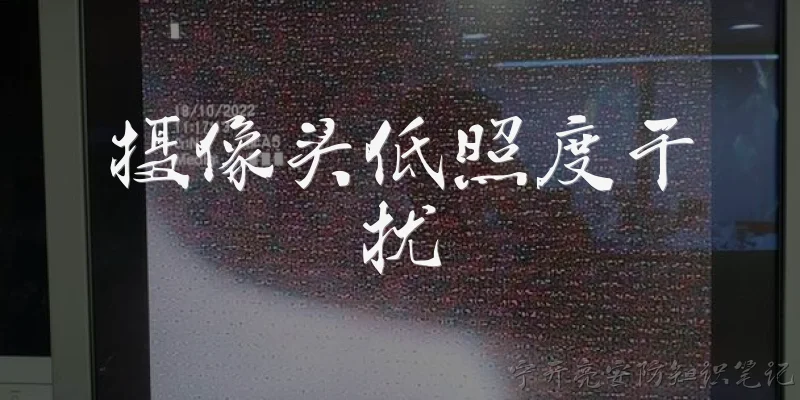
【User】 I've been having trouble with my camera in low-light conditions. The images are always grainy and noisy. Any idea why?
【Assistant】 That's a common issue. In low light, your camera increases its ISO sensitivity to compensate, which amplifies the signal but also amplifies noise. What camera model are you using?
【User】 I have a Canon EOS 80D. I usually shoot in aperture priority mode with auto ISO.
【Assistant】 The 80D is a capable camera, but its APS-C sensor can struggle in very low light. Auto ISO might be pushing the ISO too high. Try setting a maximum ISO limit, like 3200, and see if that helps.
【User】 I'll try that. But even at ISO 3200, there's still noticeable noise. Is there anything else I can do?
【Assistant】 Yes, you can use a faster lens with a wider aperture, like f/1.8 or f/1.4. That lets in more light, allowing you to lower the ISO. Also, consider using a tripod and slowing down the shutter speed if your subject is static.
【User】 I do have a 50mm f/1.8. But when I use it wide open, the images are soft. Stopping down to f/2.8 helps sharpness but then I need higher ISO.
【Assistant】 That's the trade-off. You might also try post-processing noise reduction software like Lightroom or DxO PureRAW. They can clean up noise effectively while preserving detail.
【User】 I use Lightroom already. The noise reduction helps but sometimes makes the image look plasticky. Any tips for better results?
【Assistant】 Yes, apply noise reduction selectively. Use masking to avoid smoothing out details. Also, consider shooting in RAW if you aren't already, as it gives more flexibility in post.
【User】 I always shoot RAW. But sometimes the noise is so bad that even after editing, it's still visible. Could it be a sensor issue?
【Assistant】 Possibly, but more likely it's just the limits of the sensor. The 80D's sensor is older. If you often shoot in low light, you might consider a full-frame camera, which performs better at high ISOs.
【User】 I've been thinking about upgrading to full frame. But for now, are there any in-camera settings that can help reduce noise?
【Assistant】 Yes, enable high ISO noise reduction in the camera menu. It applies noise reduction to JPEGs, but if you shoot RAW, it only affects the embedded preview. Also, use a custom white balance to avoid color noise from incorrect WB.
【User】 I see. What about using a flash or continuous light? Would that help?
【Assistant】 Absolutely. Adding light is the best way to combat noise. A speedlight or LED panel can illuminate the scene, allowing you to use lower ISO and faster shutter speeds. Just be mindful of the quality of light.
【User】 I'll try using my speedlight more often. But sometimes I want to capture natural ambiance without flash. Any other techniques?
【Assistant】 You can try image stacking. Take multiple shots and average them in post to reduce random noise. Also, use a faster shutter speed to avoid motion blur, but that might require higher ISO—so it's a balance.
【User】 Image stacking sounds interesting. I'll look into it. Thanks for all the advice!
【Assistant】 You're welcome! Experiment with these tips and see what works best for your style. Feel free to ask if you have more questions.