Can surveillance video be zoomed in?:Can surveillance video be zoomed in to identify a person or object?
Q: Can surveillance video be zoomed in to identify a person or object?
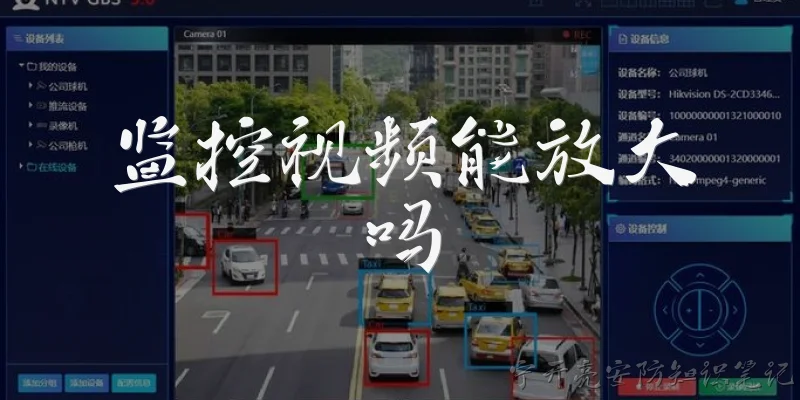
A: Yes, surveillance video can be zoomed in, but the results depend heavily on the original resolution and quality of the recording. Most modern digital video management systems (VMS) allow you to use a digital zoom feature, which essentially crops a section of the frame and enlarges it. However, digital zoom does not add new detail; it only magnifies existing pixels. If the original footage was captured at 1080p or higher and the subject occupies enough pixels, zooming in can reveal identifiable features like a face or license plate. If the footage is low-resolution (e.g., 480p) or the subject is far away, zooming in will produce a blurry, pixelated image with no new information. In many cases, forensic video analysts use advanced techniques like super-resolution or frame averaging to improve clarity, but these are not simple zoom functions and cannot create detail that wasn't recorded. Therefore, while zooming is possible, its effectiveness for identification is limited by the camera's original resolving power and the distance to the subject.
Q: Does digital zoom on surveillance cameras improve image clarity?
A: No, digital zoom does not improve image clarity; in fact, it often degrades it. Unlike optical zoom, which uses lens elements to magnify the image without loss of quality, digital zoom simply crops the image and enlarges the remaining pixels. This process makes the image appear closer but also more pixelated and blurry because the same amount of detail is stretched over a larger area. For example, if a surveillance camera captures a face that is only 20 pixels wide, digitally zooming in 4x will make that face 80 pixels wide, but each original pixel becomes a 4x4 block, resulting in a blocky, unrecognizable image. Some cameras and software offer "smart zoom" or "enhanced zoom" that uses algorithms to interpolate pixels, but these can only guess at missing detail and may introduce artifacts. For true magnification without quality loss, an optical zoom lens is required, which is common in PTZ (pan-tilt-zoom) cameras. However, even optical zoom has limits based on sensor resolution. So, while digital zoom can help you see a larger version of a region of interest, it does not make the image clearer—it usually makes it worse.
Q: What factors affect the ability to zoom in on surveillance footage effectively?
A: Several factors determine how effectively you can zoom in on surveillance footage. First, the original resolution of the camera is critical: a 4K camera captures far more detail than a 720p camera, so zooming in will yield a clearer image. Second, the distance between the camera and the subject matters—the farther away the subject, the fewer pixels they occupy, limiting zoom potential. Third, lighting conditions and lens quality affect sharpness and noise; low light or a dirty lens can make zoomed images unusable. Fourth, the compression level of the video influences detail retention; heavy compression (e.g., H.264 with a low bitrate) blurs fine details even before zooming. Fifth, the zoom method itself: digital zoom in a VMS or player is a simple crop, while forensic tools may use multi-frame super-resolution to combine information from several frames, but this requires multiple clear frames of the subject. Finally, the angle and motion of the subject: a still, front-facing subject is easier to zoom in on than a moving or angled one. In practice, if you need to identify someone, the best approach is to have high-resolution cameras positioned close to critical areas, rather than relying on post-hoc zooming.
Words of experience
Common scenarios of "Can surveillance video be zoomed in?"
【User】 Can surveillance video be zoomed in?
【Assistant】 Yes, surveillance video can be zoomed in, but the ability to do so depends on the system and the resolution of the original footage.
【User】 How does zooming work on surveillance video?
【Assistant】 Zooming can be done digitally or optically. Digital zoom crops and enlarges the image, which can reduce quality. Optical zoom uses the camera's lens to magnify without losing resolution.
【User】 So if I zoom in digitally, will the image get blurry?
【Assistant】 Yes, digital zoom often results in pixelation or blurriness because it's essentially enlarging existing pixels without adding new detail.
【User】 What about optical zoom? Can it be done after recording?
【Assistant】 Optical zoom must be done during recording because it's a physical adjustment of the lens. After recording, you can only apply digital zoom.
【User】 Are there any tools that can enhance zoomed-in surveillance footage?
【Assistant】 Yes, there are video enhancement tools that use AI to upscale and sharpen footage, but they can't create details that weren't captured originally.
【User】 Can you zoom in on a specific area, like a license plate?
【Assistant】 Absolutely, most surveillance software allows you to select a region and zoom in. However, the clarity depends on the camera's resolution and distance.
【User】 What resolution is needed to read a license plate after zooming?
【Assistant】 Generally, you need at least 1080p resolution and the plate should occupy a sufficient portion of the frame. Higher resolutions like 4K provide better results.
【User】 Does the frame rate affect zooming?
【Assistant】 Frame rate doesn't directly affect zooming, but higher frame rates can provide smoother video, which may help when zooming in on moving objects.
【User】 Is it legal to zoom in on surveillance footage?
【Assistant】 Legality depends on jurisdiction and purpose. Generally, it's legal for security personnel, but privacy laws may restrict zooming into private areas without consent.
【User】 Can I zoom in on footage from my home security camera?
【Assistant】 Yes, you can usually zoom in using the camera's app or software, but the same limitations apply regarding resolution and digital vs. optical zoom.