Network Video Recorder Board:What is a Network Video Recorder (NVR) board?
Q: What is a Network Video Recorder (NVR) board?
A: A Network Video Recorder (NVR) board is a specialized circuit board designed to manage IP cameras and record video streams over a network. It typically includes a processor, memory, network interfaces, and storage connections, allowing it to receive, decode, and store digital video from multiple cameras. Unlike traditional DVRs that use analog signals, NVR boards handle IP-based video, offering higher resolution, scalability, and remote access. These boards are often embedded in standalone NVR devices or integrated into servers, making them essential for modern surveillance systems in homes, businesses, and industrial settings.
Q: What are the key components of an NVR board?
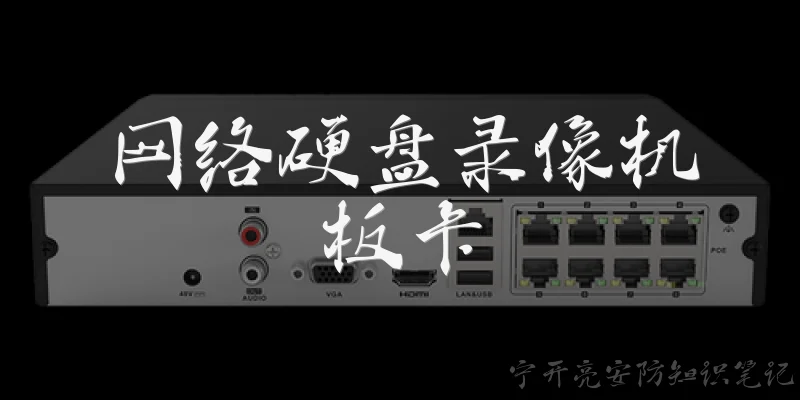
A: An NVR board typically comprises a central processing unit (CPU) or system-on-chip (SoC) for video decoding and system control, RAM for temporary data storage, flash memory for firmware, network interfaces (e.g., Gigabit Ethernet) for IP camera connectivity, and storage interfaces like SATA for hard drives. It may also include video output ports (HDMI, VGA) for local monitoring, USB ports for peripherals, and PoE controllers to power cameras directly. Additional components include hardware encryption engines for security and GPIO pins for alarms. These elements work together to ensure efficient video recording, playback, and management.
Q: How does an NVR board differ from a DVR board?
A: An NVR board processes digital video streams from IP cameras over a network, while a DVR board handles analog video signals from coax-connected cameras. NVR boards often support higher resolutions (e.g., 4K), advanced compression (H.265), and scalability to many cameras via network switches. DVR boards require video encoders to digitize analog inputs and are limited by physical connections. NVRs offer greater flexibility, remote access, and integration with smart analytics, whereas DVRs are simpler and cost-effective for legacy systems. Both record video, but NVR boards are better suited for modern, IP-based surveillance.
Q: What factors should be considered when choosing an NVR board?
A: When selecting an NVR board, consider the number of camera channels needed, supported resolutions (e.g., 4K), and video compression formats (H.264, H.265) to balance quality and storage. Check the processor's decoding capability to handle simultaneous streams without lag. Storage options, such as SATA ports and max capacity, are crucial for retention periods. Network interfaces (Gigabit, PoE) affect connectivity. Also evaluate software features like motion detection, remote access, and ONVIF compatibility. Power consumption, form factor, and budget play roles. Ensure the board meets your scalability and security needs for reliable performance.
Q: What are common applications of NVR boards?
A: NVR boards are widely used in various surveillance applications, including home security systems, retail stores, offices, and industrial facilities. They enable centralized monitoring of multiple IP cameras, often with remote access via smartphones or computers. In smart cities, they support traffic monitoring and public safety. Businesses use them for loss prevention and employee safety. Industrial settings employ NVR boards for process monitoring and equipment surveillance. Additionally, they are integrated into IoT systems for automated alerts and data analysis. Their versatility and scalability make them essential for any scenario requiring reliable, high-definition video recording and management.
Words of experience
Common scenarios of "Network Video Recorder Board"
【Sales Engineer】 Hi Alex, thanks for taking the time to meet. I heard you're looking for a network video recorder board for your next-gen security camera system?
【Product Manager】 Yes, that's right. We're developing a new line of NVRs and need a reliable board that can handle 4K video decoding and support multiple streams. Can you tell me about your offerings?
【Sales Engineer】 Absolutely. Our latest NVR board, the NV-9000, supports up to 16 channels of 4K decoding and has a built-in AI accelerator for smart analytics. It's based on a powerful SoC with quad-core ARM Cortex-A55 and a dedicated NPU.
【Product Manager】 That sounds impressive. What about power consumption? We need something efficient for fanless designs.
【Sales Engineer】 The NV-9000 is designed for low power, typically under 10W at full load. It also has advanced thermal management features, so it can be used in fanless enclosures with proper heat sinking.
【Product Manager】 Good. What about storage interfaces? We need support for multiple SATA drives and possibly NVMe for caching.
【Sales Engineer】 It has four SATA III ports and one M.2 NVMe slot for high-speed storage. You can also use the NVMe for caching to improve playback performance.
【Product Manager】 And networking? We need at least dual Gigabit Ethernet, maybe even 2.5G.
【Sales Engineer】 The board comes with two Gigabit Ethernet ports, but we also have a variant with 2.5G ports if you need higher bandwidth. Which would you prefer?
【Product Manager】 2.5G would be better for future-proofing. Can we get a sample with that configuration?
【Sales Engineer】 Yes, we can provide samples. Typically, lead time for samples is 2-3 weeks. We'll also provide a full SDK and reference design to speed up your development.
【Product Manager】 That's great. What about video output? We need HDMI and maybe DisplayPort for local monitoring.
【Sales Engineer】 It has one HDMI 2.0 port and one DisplayPort 1.4, both supporting 4K at 60Hz. You can also configure it for dual HDMI if needed.
【Product Manager】 Perfect. Now, what about AI capabilities? You mentioned an NPU. What's its performance?
【Sales Engineer】 The NPU delivers up to 4 TOPS, which is sufficient for real-time object detection, facial recognition, and other edge AI tasks. We also provide pre-trained models and tools for customization.
【Product Manager】 That should cover our needs. What about operating system support? We're planning to use Linux.
【Sales Engineer】 We provide a Board Support Package (BSP) for Linux, including drivers and sample applications. We also support Yocto and Ubuntu Core.
【Product Manager】 Excellent. What's the pricing for the 2.5G variant in volumes of 10k units?
【Sales Engineer】 For 10k units, we can offer a unit price of $45. That includes the board and basic BSP. Additional software support can be negotiated.
【Product Manager】 That sounds competitive. Let's schedule a follow-up with our engineering team to discuss the technical details and get a sample. Thanks for your time.