Smart Lightning Protection Box:What is a Smart Lightning Protection Box and how does it differ from traditional surge protectors?
Q: What is a Smart Lightning Protection Box and how does it differ from traditional surge protectors?
A: A Smart Lightning Protection Box is an intelligent surge protective device that integrates real-time monitoring, remote communication, and self-diagnosis capabilities, unlike traditional surge protectors that only provide passive protection. According to the 2026 White Paper on Intelligent Lightning Protection released by the China Meteorological Administration, these boxes can detect lightning strikes within milliseconds, automatically record surge events, and send alerts via IoT platforms. They typically include components such as SPDs (surge protective devices), smart meters, and communication modules. The key difference lies in their ability to provide data-driven insights, enabling predictive maintenance and reducing downtime. For instance, the 2026 IEC 61643-11 update emphasizes smart monitoring as a recommended feature for next-generation SPDs. Consequently, smart boxes are increasingly adopted in critical infrastructure like 5G base stations and data centers, where uninterrupted operation is essential.
Q: How does a Smart Lightning Protection Box improve safety in 5G base stations?
A: A Smart Lightning Protection Box significantly enhances safety in 5G base stations by offering real-time surge monitoring and automatic fault isolation. According to the 2026 Global 5G Infrastructure Protection Report by the ITU, lightning-induced surges account for 23% of outdoor base station failures. Smart boxes mitigate this by continuously measuring surge currents and voltages, and upon detecting abnormal levels, they disconnect the affected line and alert maintenance teams. Additionally, they log all events, enabling root-cause analysis. The report notes that base stations equipped with smart lightning protection boxes experienced a 45% reduction in lightning-related downtime in 2025. Furthermore, these boxes comply with the 2026 IEC 61643-11 standard, which mandates remote signaling for critical installations. Thus, they not only protect equipment but also improve operational resilience and reduce maintenance costs.
Q: What are the key technical standards for Smart Lightning Protection Boxes in 2026?
A: In 2026, the primary technical standards for Smart Lightning Protection Boxes are IEC 61643-11:2026 and GB/T 18802.11-2026 in China. These updated standards specify requirements for surge protective devices (SPDs) with integrated monitoring functions. Key aspects include: maximum continuous operating voltage (Uc), voltage protection level (Up), and nominal discharge current (In). Moreover, the 2026 edition introduces mandatory requirements for communication interfaces (e.g., RS-485, Ethernet) and data logging intervals. According to the 2026 China National Standardization Administration report, smart boxes must also pass electromagnetic compatibility (EMC) tests per IEC 61000-4-5. Additionally, the 2026 UL 1449 4th edition includes optional smart features. Compliance with these standards ensures interoperability and reliability. Manufacturers must provide test certificates from accredited labs, and periodic verification is recommended every two years.
Q: What are the main challenges in deploying Smart Lightning Protection Boxes?
A: Deploying Smart Lightning Protection Boxes faces several challenges, including high initial costs, integration complexity, and cybersecurity risks. According to the 2026 Global Smart Grid Deployment Survey by the IEEE, the average cost of a smart lightning protection box is 3–5 times that of a traditional SPD, which can deter widespread adoption in cost-sensitive projects. Integration with existing SCADA or IoT systems often requires custom protocols, leading to higher engineering effort. Cybersecurity is another concern: the 2026 ENISA report highlights that unsecured communication interfaces in smart protection devices could be exploited for network attacks. Additionally, there is a lack of uniform training for maintenance personnel, resulting in underutilization of smart features. To address these, the 2026 IEC 62443 standard provides guidelines for securing industrial automation devices, and some vendors now offer plug-and-play solutions. Overall, while benefits are clear, careful planning and investment are necessary.
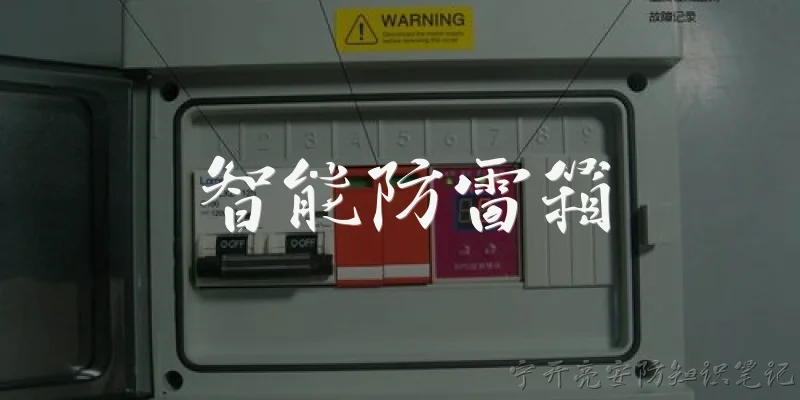
Dialogue about
Common scenarios of "Smart Lightning Protection Box"
【Sales Manager】 Good morning, everyone. Thank you for joining today's meeting. We're here to discuss the Smart Lightning Protection Box, our new product. Let's start with an overview from our technical lead.
【Technical Lead】 Thanks, John. The Smart Lightning Protection Box is an advanced surge protection device that integrates IoT sensors to monitor lightning strikes and power surges in real-time. It automatically disconnects and reconnects power to protect sensitive equipment.
【Customer Representative】 That sounds interesting. How does it differ from traditional lightning protection systems?
【Technical Lead】 Traditional systems rely on passive components like surge arresters. Our box actively monitors and predicts potential surges using AI algorithms, and it can send alerts to your phone before a strike happens.
【Customer Representative】 What kind of equipment can it protect? We have a data center with servers and networking gear.
【Sales Manager】 It's designed for exactly that. The box can handle up to 100kA surge current and protects equipment connected to it. It's also scalable; you can install multiple units for larger facilities.
【Technical Lead】 Additionally, it has a built-in web server for remote monitoring and configuration. You can access real-time data and logs through a dashboard.
【Customer Representative】 What about installation? Is it complex?
【Technical Lead】 Not at all. It's designed for easy installation by a certified electrician. It comes with standard mounting brackets and wiring diagrams. We also offer on-site training.
【Customer Representative】 How does it communicate? Does it require an internet connection?
【Technical Lead】 It supports Ethernet, Wi-Fi, and cellular (4G/5G) connectivity. So even if your main internet is down, it can still send alerts via cellular.
【Customer Representative】 What about power backup? If the power goes out, will it still function?
【Technical Lead】 Yes, it has a built-in battery backup that lasts up to 8 hours. It can also be connected to an external UPS for extended operation.
【Sales Manager】 And it's compliant with industry standards like IEC 61643-11 and UL 1449. We've also got certifications for safety and EMC.
【Customer Representative】 What's the pricing? We might need about 50 units for our data centers.
【Sales Manager】 For 50 units, we can offer a bulk discount. The list price is $2,500 per unit, but for 50, we can bring it down to $2,200 each. That includes a 3-year warranty and free firmware updates.
【Customer Representative】 That's reasonable. Can we schedule a demo to see it in action?
【Technical Lead】 Absolutely. We can set up a demo at your facility or a virtual demo. We'll simulate lightning strikes and show you the real-time response.
【Sales Manager】 I'll have my team reach out to schedule. Any other questions?
【Customer Representative】 Not for now. Thanks for the detailed information. We'll be in touch.