Large screen solution for monitoring room:What are the key components of a large screen solution for a monitoring room?
Q: What are the key components of a large screen solution for a monitoring room?
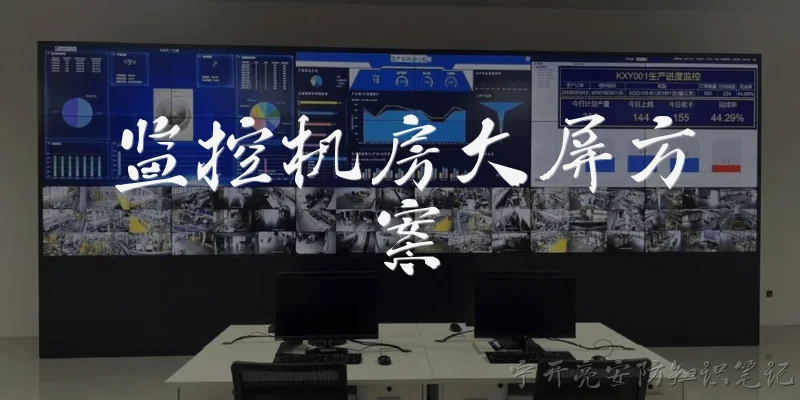
A: A large screen solution for a monitoring room typically consists of a video wall made of LCD or LED panels, a video wall controller or matrix switcher, signal distribution hardware (encoders and decoders or extenders), and management software. The controller aggregates feeds from cameras, servers, SCADA systems, and workstations, then maps them across the wall. Redundancy, such as backup power and duplicate signal paths, is essential for 24/7 operation. Proper mounting structures, cooling, and cabling infrastructure are also critical components to ensure reliability and ease of maintenance in continuous monitoring environments.
Q: How do you choose between LCD and LED panels for a monitoring room video wall?
A: LCD panels offer high resolution, low cost per inch, and are ideal for detailed data, maps, and text-heavy content; however, bezels cause visible seams unless ultra-narrow models are used. LED displays provide seamless images, high brightness, and long lifespan, making them suitable for control rooms where continuous operation and large viewing distances matter, but they cost more and may have lower pixel density at close range. Consider viewing distance, content type, budget, and required uptime when deciding, and often a hybrid approach works best.
Q: What signal management features are important in a control room large screen system?
A: Important features include flexible windowing (picture-in-picture, overlays, free scaling), low-latency real-time switching, support for multiple input types (HDMI, SDI, IP streams, DisplayPort), and centralized control software with preset layouts. Remote KVM control, alarm-triggered layouts, and integration with video management systems (VMS) enhance operator efficiency. Scalability for future sources, redundancy of controllers, and role-based access control are also key. These features ensure operators can quickly reconfigure the wall during incidents and maintain situational awareness without delays.
Q: How should a monitoring room large screen solution be maintained and what reliability measures are needed?
A: Reliability starts with redundant controllers, power supplies, and network paths, plus hot-swappable components. Regular maintenance includes cleaning panels, checking cable connections, verifying firmware updates, and testing failover procedures. Monitoring software should provide health alerts for panels, controllers, and signal sources. Environmental control (temperature, humidity, dust) extends equipment life. Scheduled preventive maintenance and spare parts inventory reduce downtime. For 24/7 rooms, consider dual redundant systems and documented recovery procedures so operators can restore displays quickly after any failure.
Q: What are typical use cases and benefits of large screen solutions in monitoring rooms?
A: Common use cases include security operations centers, traffic management, utility and industrial SCADA control, broadcast monitoring, and emergency dispatch. Benefits include a shared situational picture that improves team coordination, faster incident detection and response, reduced operator fatigue through ergonomic layouts, and the ability to display many data sources simultaneously. A well-designed wall also supports video analytics, GIS maps, and KPIs in one view, enabling quicker decision-making and better resource allocation across operations.
Words of experience
Common scenarios of "Large screen solution for monitoring room"
【Sales Manager】 Good morning, thanks for coming in. I understand you're planning a large screen solution for a new monitoring room. Can you tell me a bit about the room and what you'll be monitoring?
【Client】 Morning. The room is about 12 by 8 meters. We monitor grid operations — SCADA systems, camera feeds, weather maps, and alarm dashboards. Operators sit about 6 meters from the wall.
【Sales Manager】 That viewing distance is important. At 6 meters, a fine-pitch LED wall or a narrow-bezel LCD video wall would both work. How many simultaneous sources do you typically need on screen?
【Client】 Roughly 16 to 24 windows at once, and we need at least four operators to control layouts independently.
【Sales Manager】 Then I'd lean toward an LED video wall with a distributed processor, so each operator gets their own layout control. What's your budget range and preferred resolution?
【Client】 We're targeting 4K or higher for the full wall. Budget is flexible but we need justification. What pixel pitch would you recommend at 6 meters?
【Sales Manager】 For 6 meters, a P1.5 to P1.8 pitch gives excellent clarity without overspending. P1.2 would be sharper but costs significantly more. Do you have ambient lighting concerns?
【Client】 Yes, there are large windows on one side. Glare has been a problem in our current setup with projectors.
【Sales Manager】 That rules out projection. LED at 800-1000 nits handles daylight well. LCD is also viable but has visible seams across a large wall. How critical is a seamless image for you?
【Client】 Seamless matters — operators track map lines across the whole wall. So LED sounds right. What about redundancy?
【Sales Manager】 We'd design dual power supplies and a redundant sending card, plus a backup processor. If a cabinet fails, the rest keeps running. How many hours a day will it operate?
【Client】 24/7, 365. Reliability is non-negotiable.
【Sales Manager】 Understood. Then I'd specify industrial-grade cabinets and a serviceable front-access design so you can swap modules without dismantling the wall. Shall we talk about the control system?
【Client】 Yes. We need KVM over IP so operators can push any workstation to any screen region.
【Sales Manager】 We can integrate a KVM-over-IP matrix with the video wall processor. Operators get a touch panel or software UI to drag windows. Do you need audio and recording as well?
【Client】 Audio yes, for alarms. Recording of the wall output would be useful for incident review. Is that feasible?
【Sales Manager】 Absolutely — we can add a streaming recorder that captures the wall canvas. Now, about installation: is the wall structurally load-bearing, and do you have cable routes planned?
【Client】 The wall is concrete, load-bearing. Cable routes are still being designed, so we have flexibility.
【Sales Manager】 Good. I'll prepare a proposal with a P1.5 LED wall, redundant processing, KVM integration, and recording. Can we schedule a site survey next week to confirm dimensions and power?
【Client】 Next Tuesday works. Please include a phased option too, in case we need to stage the investment.