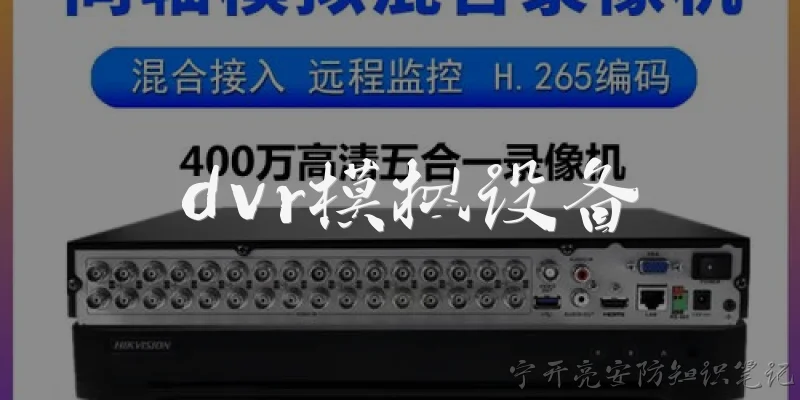
DVR simulation device:What is a DVR simulation device and how does it function?
Q: What is a DVR simulation device and how does it function?
A: A DVR simulation device is a hardware or software tool that mimics the operation of a digital video recorder without recording actual video. It generates synthetic video streams, typically for testing purposes, such as evaluating surveillance systems, video analytics, or display equipment. The device outputs signals that appear as live or recorded footage from a DVR, allowing engineers to verify compatibility, performance, and user interfaces. It can emulate multiple camera feeds, timestamps, and playback controls. By providing controlled, repeatable video signals, it eliminates the need for real cameras and recordings during development and troubleshooting.
Q: What are the primary applications of DVR simulation devices in security testing?
A: DVR simulation devices are widely used in security testing to validate video management systems, network video recorders, and monitoring software. They help test camera discovery, stream authentication, and recording schedules without deploying actual cameras. Testers can simulate motion events, video loss, and tampering to assess alarm generation and system response. The devices also aid in load testing by emulating dozens of camera streams simultaneously. Additionally, they support forensic tool validation by generating known video sequences. This reduces cost and complexity, enabling repeatable, controlled tests for both development and quality assurance in surveillance environments.
Q: How does a DVR simulation device differ from a real DVR in a lab environment?
A: A DVR simulation device differs from a real DVR primarily in its lack of physical storage and camera inputs. While a real DVR records and stores actual video from connected cameras, a simulator generates synthetic video streams on the fly, often without persistent storage. It may not include tuners or encoding hardware for live capture. Instead, it focuses on emulating network protocols, video formats, and user interfaces. This makes it lighter, cheaper, and more flexible for testing. However, it cannot replace a real DVR for testing recording fidelity, storage limits, or hardware reliability. It is a complement, not a substitute.
Q: What key features should one look for in a DVR simulation device for development purposes?
A: When selecting a DVR simulation device for development, look for support for multiple video codecs (H.264, H.265, MJPEG) and resolutions up to 4K. It should emulate common DVR protocols like ONVIF, RTSP, and proprietary APIs. The ability to generate configurable motion events, timestamps, and video artifacts is crucial. Also, consider the number of simultaneous streams, ease of scripting or API access, and compatibility with your target systems. A user-friendly interface for quick scenario setup and logging capabilities for debugging are beneficial. Finally, ensure it can output to both physical interfaces and network streams as needed.
Q: Can a DVR simulation device be used for training purposes, and if so, how?
A: Yes, a DVR simulation device can be valuable for training security personnel and technicians. It allows trainees to practice navigating DVR menus, searching recorded footage, and responding to simulated alarms without risking real equipment or data. Instructors can create scenarios like a break-in or camera failure to test decision-making. The simulator can generate realistic video feeds with time stamps, making the training immersive. It also helps new installers learn configuration and troubleshooting steps in a safe environment. By repeating scenarios, trainees gain confidence and proficiency before working with live systems.
Words of experience
Common scenarios of "DVR simulation device"
【Sales Representative】 Good morning! Welcome to TechSim Labs. How can I assist you today?
【Customer】 Hi, I'm interested in your DVR simulation device. Can you tell me what it does exactly?
【Sales Representative】 Absolutely! Our DVR simulation device replicates the functionality of a standard digital video recorder but in a virtual environment. It's used for testing, training, and development purposes.
【Customer】 That sounds interesting. What are the key features?
【Sales Representative】 It supports multiple channels, scheduled recording, playback, and even network streaming. You can simulate various scenarios without needing actual hardware.
【Customer】 Can it integrate with existing systems?
【Sales Representative】 Yes, it offers APIs and SDKs for integration with your software. It can also emulate different DVR models from various manufacturers.
【Customer】 What about storage and performance?
【Sales Representative】 It uses your computer's storage and can be configured to simulate different disk sizes and speeds. Performance depends on your hardware, but it's optimized for efficiency.
【Customer】 Is it easy to set up?
【Sales Representative】 Yes, it comes with a user-friendly interface and detailed documentation. Most users are up and running within an hour.
【Customer】 What are the licensing options?
【Sales Representative】 We offer both perpetual licenses and annual subscriptions. The subscription includes updates and support.
【Customer】 How much does it cost?
【Sales Representative】 The perpetual license starts at $999, and the annual subscription is $499 per year. We also offer discounts for bulk purchases.
【Customer】 Can I try a demo before buying?
【Sales Representative】 Of course! We offer a 14-day free trial. You can download it from our website.
【Customer】 Great! I'll download the trial and test it out.
【Sales Representative】 Perfect! If you have any questions during the trial, feel free to contact our support team.
【Customer】 Will do. Thanks for your help!