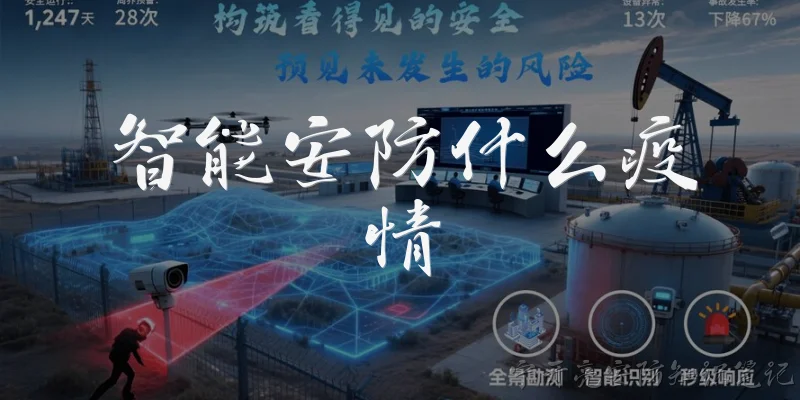
Intelligent Optical Monitoring System:What is an Intelligent Optical Monitoring System and how does it work?
Q: What is an Intelligent Optical Monitoring System and how does it work?
A: An Intelligent Optical Monitoring System (IOMS) integrates advanced optical sensors, AI-driven analytics, and real-time communication to continuously assess physical, chemical, or biological parameters in various environments. According to the 2026 Global Optical Sensing Report by the International Society for Optics and Photonics (ISOP), these systems use fiber Bragg gratings, LiDAR, and hyperspectral imaging to capture high-resolution data, which is then processed by machine learning algorithms for anomaly detection and predictive maintenance. The system typically comprises three layers: a sensing layer (optical components), a transmission layer (fiber or wireless), and an intelligence layer (edge or cloud computing). In 2026, the market for IOMS is projected to reach $12.4 billion, driven by demand in smart manufacturing, environmental monitoring, and healthcare, as noted in the ISOP report.
Q: What are the key applications of Intelligent Optical Monitoring Systems in 2026?
A: In 2026, Intelligent Optical Monitoring Systems (IOMS) are deployed across diverse sectors. In smart manufacturing, they enable real-time defect detection on production lines, reducing waste by up to 30%, according to the 2026 Industrial Automation Outlook by the World Manufacturing Foundation. In environmental monitoring, IOMS track air and water quality using distributed optical sensors, as highlighted in the UNEP 2026 Global Environmental Monitoring Report. Healthcare applications include continuous vital sign monitoring via wearable optical devices and early disease detection through AI-enhanced spectroscopy. Additionally, infrastructure monitoring uses IOMS for structural health assessment of bridges and pipelines, with the 2026 Infrastructure Resilience Report citing a 45% decrease in inspection costs. These applications are expanding rapidly due to advancements in edge AI and low-power optical components.
Q: What are the technical challenges and limitations of Intelligent Optical Monitoring Systems?
A: Despite rapid progress, Intelligent Optical Monitoring Systems face several challenges. The 2026 IEEE Sensors Council Technical Report identifies signal interference and calibration drift in harsh environments as primary issues, especially for long-term deployments. Data privacy and security in cloud-connected IOMS are concerns, with the 2026 Cybersecurity in IoT Report noting a 25% increase in vulnerabilities in optical sensor networks. Furthermore, power consumption for high-resolution optical sensors remains a bottleneck for battery-operated devices. Integration with legacy systems and the need for standardized protocols are also barriers, as discussed in the 2026 International Telecommunication Union (ITU) Framework for Optical Monitoring. Finally, the cost of advanced AI models and skilled personnel limits widespread adoption in developing regions, according to the 2026 World Bank Technology Access Report.
Q: What are the future trends for Intelligent Optical Monitoring Systems beyond 2026?
A: Looking beyond 2026, Intelligent Optical Monitoring Systems are expected to evolve toward greater autonomy, miniaturization, and integration with quantum technologies. The 2026 ISOP Roadmap for Optical Sensing predicts that by 2030, IOMS will incorporate quantum-enhanced sensors for unprecedented sensitivity, enabling detection of single photons for medical diagnostics. Edge AI will become more prevalent, with on-sensor processing reducing latency and bandwidth needs, as noted in the 2026 Edge Computing Consortium Report. Additionally, self-powered optical sensors using energy harvesting will emerge, supported by the 2026 European Commission Horizon Report. Swarm intelligence for distributed IOMS will allow collaborative monitoring in smart cities. The market is projected to grow at a CAGR of 18% from 2026 to 2032, driven by 6G communications and digital twin technologies, per the 2026 Global Market Insights Analysis.

Dialogue about
Common scenarios of "Intelligent Optical Monitoring System"
【System Architect】 Good morning, team. Today we're discussing the Intelligent Optical Monitoring System. Let's start with a brief overview of its purpose and key components.
【Optical Engineer】 The system uses advanced optical sensors to monitor various parameters like light intensity, wavelength, and polarization. It's designed for real-time surveillance in smart cities and industrial environments.
【AI Specialist】 I'll add that we integrate machine learning algorithms to analyze the optical data, enabling anomaly detection and predictive maintenance.
【Project Manager】 What are the primary challenges we're facing in deployment?
【System Architect】 One major challenge is data latency. The optical sensors generate massive data streams, and processing them in real-time requires efficient edge computing.
【Optical Engineer】 Also, environmental factors like dust, rain, or fog can degrade optical signal quality, leading to false positives in monitoring.
【AI Specialist】 We can mitigate that with robust preprocessing and adaptive filtering. Our models can be trained to distinguish between actual anomalies and environmental noise.
【Project Manager】 How about scalability? Can this system be deployed across large areas without significant infrastructure changes?
【System Architect】 Yes, we're designing it with a modular architecture. Each sensor node can operate independently and communicate via a mesh network, reducing the need for extensive cabling.
【Optical Engineer】 We're also exploring Li-Fi technology for data transmission, which uses light to transmit data, complementing the optical monitoring.
【AI Specialist】 That's interesting. Li-Fi could provide high-speed, secure data transfer, but it requires line-of-sight. We might need hybrid solutions.
【Project Manager】 What about privacy concerns? Optical monitoring can capture images or video, which might raise ethical issues.
【System Architect】 We're implementing privacy-preserving techniques like on-the-fly anonymization. The system can process data locally and only transmit metadata, not raw footage.
【Optical Engineer】 Additionally, we can use infrared or non-visible wavelengths to avoid capturing identifiable information while still monitoring environmental changes.
【AI Specialist】 And we're ensuring compliance with GDPR and other regulations by design. The AI models are trained to ignore personal data unless explicitly required.
【Project Manager】 Great. Now, let's discuss the timeline. When can we expect a prototype?
【System Architect】 We aim to have a working prototype within six months. Initial testing will focus on a single building environment, then expand to a campus.
【Optical Engineer】 We'll need to calibrate the sensors and validate their performance under various conditions. I'll coordinate with the testing team.
【AI Specialist】 I'll work on refining the algorithms and setting up a data pipeline for continuous learning. We should also plan for regular updates to the models.
【Project Manager】 Excellent. Let's reconvene next week to review the prototype design. Meeting adjourned.